Uxvionian
Layer Collection
Layer Collection
Couldn't load pickup availability
- 📁 Digital file available after purchase
- 🗂️ Long-term availability
- 🔐 Secure checkout
- 📝 Content updated in 2026
Self-paced learning overview
1. Problem Statement
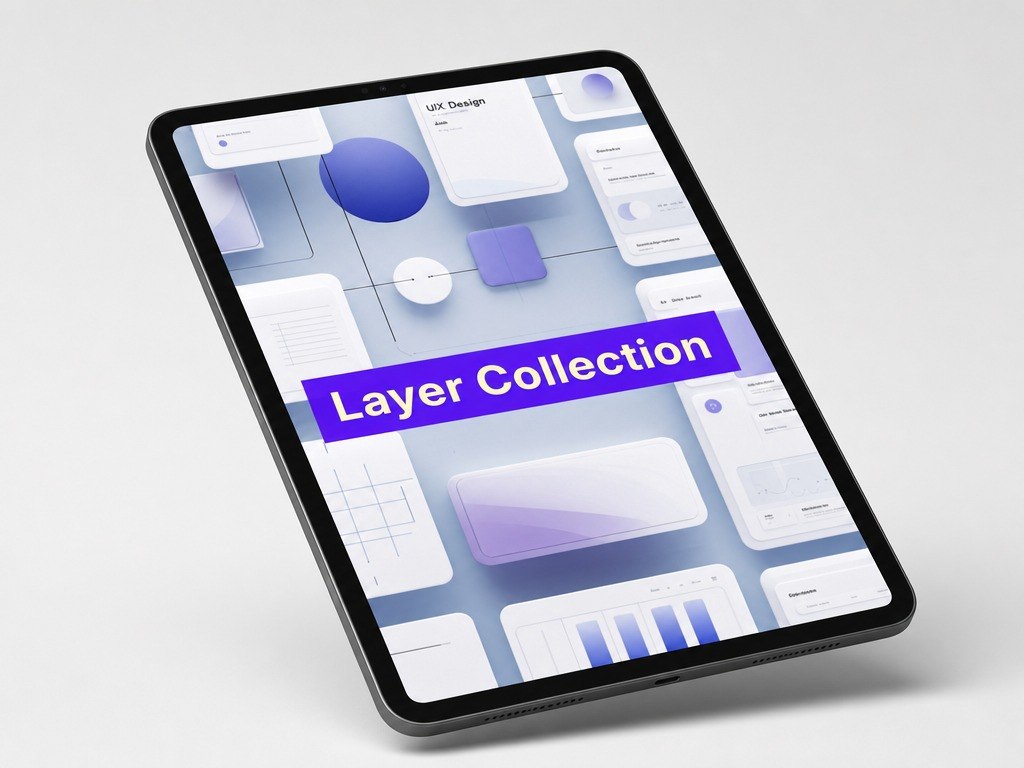
When a designer starts working with larger pages or more complex scenarios, it becomes harder to keep all elements within one logical system. A screen can include text, buttons, navigation, forms, cues, visual sections, and additional states at the same time. Without understanding which level is responsible for what, the interface may feel overloaded or inconsistent. Often, the issue is not one separate element, but the lack of alignment between information, actions, and visual emphasis. Layer Collection was created to help learners examine an interface by layers and see how each part supports the overall logic.
2. Solution
Layer Collection explains how to work with an interface across several levels: structure, content, navigation, actions, visual hierarchy, and screen states. The materials show how to divide a complex interface into clear parts and analyze the role of each one. Learners study where information should be primary, where a supporting cue is needed, and where an element distracts from the scenario. The course helps create more consistent pages in which every layer has its own task. This collection is for those who want to work more deeply with UI/UX structure and think beyond separate screens toward full interaction systems.
3. What’s Inside
- Module 1: Interface Layers — how to distinguish levels of structure, content, actions, and visual presentation.
- Module 2: Information Architecture — how to group topics, pages, and sections into a clear system.
- Module 3: Navigation Level — how to help users understand where they are and where they can go next.
- Module 4: Action Level — how buttons, forms, and transitions support the main scenario.
- Module 5: Supporting Elements — how cues, messages, and microcopy explain actions without adding extra weight.
- Module 6: Visual Layer — how emphasis, spacing, grouping, and contrast support the content.
- Module 7: Screen States — how to think through moments before action, after action, during an issue, or while waiting.
- Module 8: Practical Review — how to analyze an interface by layers and find places to improve the structure.
- Module 9: Multi-Level Page Scheme — how to assemble a page where every level has a clear role.
4. Who Is This For?
✅ Good fit if you:
- already understand basic screen logic and user scenarios;
- want to learn how to break complex interfaces into clear parts;
- want to work better with navigation, states, and supporting elements;
- want to see the difference between main information, additional explanations, and visual emphasis;
- enjoy practical analysis, schemes, and detail-oriented work.
❌ Not for you if you:
- are looking only for a short introduction to UI/UX design;
- do not want to work with information architecture and structural schemes;
- expect claims about career or financial outcomes;
- want learning tied to specific programs or third-party services;
- do not plan to complete practical interface reviews.
5. What You’ll Learn
- Distinguish the main layers of a digital interface.
- Analyze the information architecture of a page or small digital environment.
- Define the role of navigation in a user scenario.
- Understand how buttons, forms, and transitions support action logic.
- Work with supporting text, cues, and messages.
- Notice when the visual layer supports structure and when it creates unnecessary noise.
- Describe different screen states and their role in interaction.
- Complete an interface review by layers using a suggested structure.
- Create a basic scheme for a multi-level page with clear section logic.
6. Support and Return Terms
- You may contact the Uxvionian team within 30 days after purchase if the material format does not match your expectations.
- Requests are reviewed according to the rules listed on the website.
- The team helps with questions about learning materials, module flow, and study format.
- Layer Collection does not include loud outcome claims; it offers structured materials for gradual UI/UX skill development.
1. Are the courses suitable if I am just starting with UI/UX design?
1. Are the courses suitable if I am just starting with UI/UX design?
Yes, the materials are structured so learners can move step by step: from basic concepts to more detailed design decisions. Each plan includes a clear learning path that helps explain interface logic, user flows, and visual presentation.
2. Can I study at my own pace?
2. Can I study at my own pace?
3. How are the plans different from each other?
3. How are the plans different from each other?
The plans grow in the amount of materials, number of practical tasks, topic depth, and level of detail. Introductory plans cover the basics, while higher collections include more scenarios, examples, structures, and complex assignments.
Share